The Role of Augmented Reality in Enhancing STEM Education
Uncover how augmented reality is revolutionizing the way students engage with STEM subjects, making complex concepts more accessible and interactive.
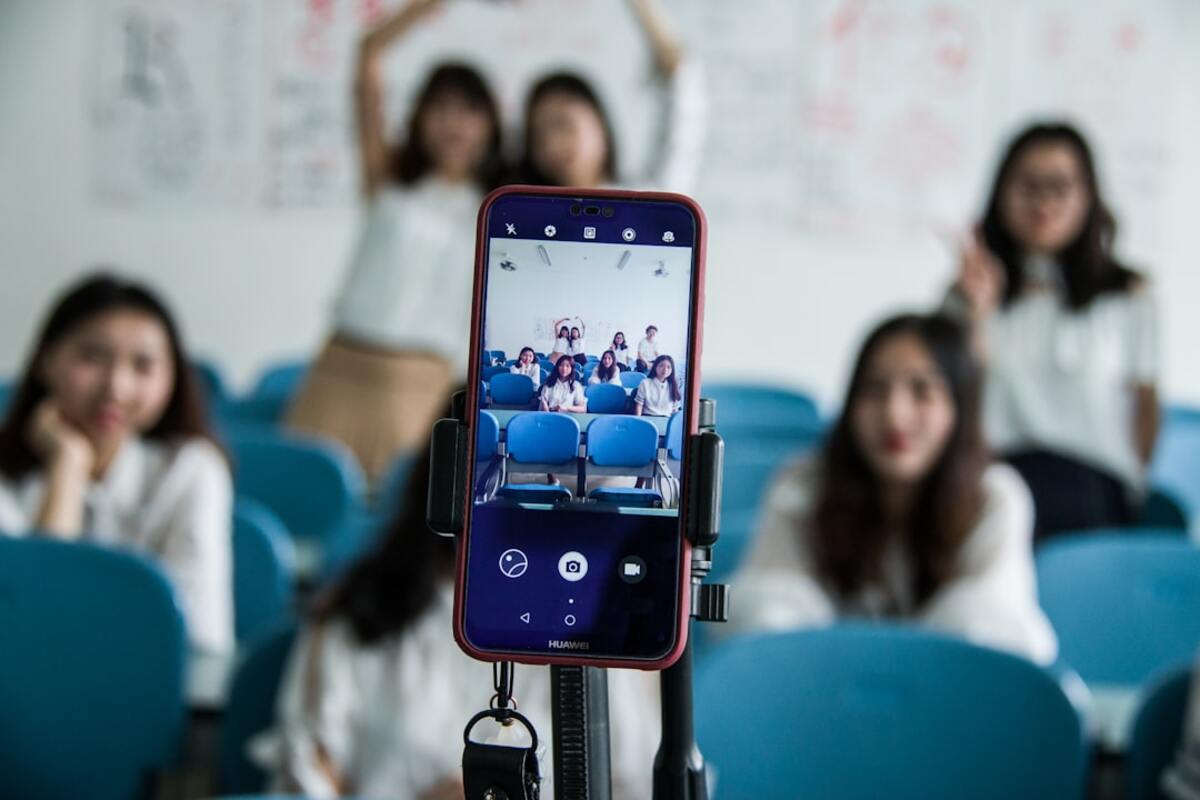
- Augmented reality (AR) is transforming STEM education by offering immersive and interactive experiences.
- AR tools enable students to visualize complex scientific concepts in a tangible way, enhancing comprehension.
- The integration of AR in classrooms can increase student engagement and foster a deeper understanding of science, technology, engineering, and mathematics.
The Emergence of Augmented Reality in Education
As technology continues to evolve, educators are constantly seeking innovative ways to engage students and enhance learning experiences. One such advancement is augmented reality (AR), a technology that superimposes digital content onto the real world, providing an interactive and immersive experience. In the realm of STEM (Science, Technology, Engineering, Mathematics) education, AR is proving to be a groundbreaking tool that can transform traditional learning methodologies.
Traditionally, STEM subjects have been challenging for many students due to their abstract and complex nature. Concepts such as molecular structures, physics formulas, and engineering designs can be difficult to grasp through textbooks and lectures alone. However, with AR, these concepts can be visualized in a 3D space, allowing students to interact with and explore them in ways that were previously unimaginable.

How Augmented Reality Enhances STEM Learning
One of the most significant advantages of AR in STEM education is its ability to provide students with a hands-on learning experience. For instance, AR applications can bring a human anatomy model to life, allowing students to explore different systems and organs in 3D. Similarly, in chemistry, AR can enable students to visualize molecular bonds and reactions, offering a deeper understanding of chemical processes.
Furthermore, AR can make abstract mathematical concepts more tangible. Geometric shapes can be manipulated in a 3D environment, aiding students in comprehending spatial relationships and properties. In physics, students can simulate experiments and observe the effects of forces and motion in a controlled AR setting, where they can safely test and retest hypotheses without the limitations of a physical lab.
Challenges and Future Prospects
Despite its potential, the integration of AR in classrooms is not without challenges. Access to technology and resources, teacher training, and curriculum adaptation are significant hurdles that need to be addressed. Schools, especially in underfunded areas, may struggle to provide the necessary hardware and software to fully implement AR in their teaching practices.
However, as AR technology becomes more affordable and accessible, it is likely to become a staple in education systems around the world. Companies are developing more user-friendly and affordable AR tools tailored for educational purposes, and educational institutions are recognizing the value of integrating these technologies into their curricula.
In conclusion, augmented reality has the potential to revolutionize STEM education by making learning more interactive and accessible. As the education sector continues to adapt to technological advancements, AR is poised to play a pivotal role in shaping the future of how students learn and interact with complex subjects.